Need Help?




Hospitals record very high numbers of stomach infections during Diwali. The exact cause is not overeating. It is mostly contaminated sweets. Made directly from adulterated mawa. And gifted sweet boxes just stay for days without any expiry checks.
So, eating these stale sweets causes severe vomiting and loose motions. That is why checking your food sources is very important. And sticking to fresh homemade items prevents this festive food poisoning completely.
Stomach Infections During Diwali: Why the Risk Is Higher
Stomach infections during Diwali increase very fast. Because people eat a lot of fried and sugary foods. And there is heavy overeating everywhere. Along with adulterated khoya sweets and improper food storage during parties.
- Binge and Overeating: Eating large amounts of rich and spicy meals puts heavy strain on your digestion.
- High Sugar and Fat: Excessive deep-fried snacks and sweets completely disrupt your gut bacteria.
- Adulterated Sweets: The high demand for mawa sweets leads to quick spoilage. Or the use of substandard ingredients, actually. This directly causes food poisoning. And if things get bad, you might even need a doctor’s checkup at home just to be safe.
- Irregular Meal Timings: Late-night card parties and ignored meals confuse your body’s internal clock.
- Dehydration: Drinking too much tea or sugary drinks instead of plain water causes dehydration. And that just makes your indigestion much worse.
Also read: Top 10 Diagnostic Service Providers in Jaipur
Diwali Foods That Cause Food Poisoning
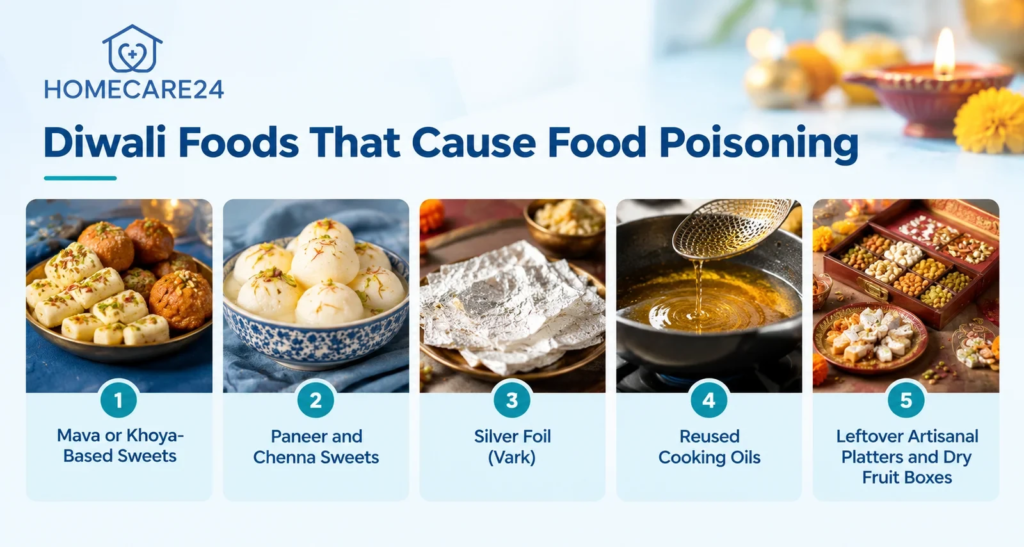
During Diwali, rising food poisoning cases are strongly linked to adulteration. Improper dairy storage and unhygienic bulk preparation cause this. So, these specific foods pose the highest risk of stomach infections this season.
1. Mava or Khoya-Based Sweets
Mava is the base for sweets like Gulab Jamun and Barfi. But due to high demand, it gets adulterated with starch or urea. Unrefrigerated milk solids easily harbour harmful bacteria. So, this is exactly where food safety during festivals fails first.
2. Paneer and Chenna Sweets
Fresh cheese sweets like Rasgulla have very high moisture content, actually. This allows bad bacteria to multiply rapidly. If not kept constantly chilled, they spoil within hours. That is why proper, safe storage of Diwali sweets is so important.
3. Silver Foil (Vark)
The silver coating on premium sweets is frequently counterfeited. Cheaper toxic aluminium metals are sometimes used instead. Consuming these contaminants causes severe stomach cramps. So, if the pain gets bad, you might need online diagnostic services to check it.
4. Reused Cooking Oils
Sweetshops and households often deep-fry festive snacks in large batches. But repeatedly reheating the same oil creates toxic compounds. This severely irritates your stomach lining and causes nausea. So proper food hygiene at home should always mean using fresh oil.
5. Leftover Artisanal Platters and Dry Fruit Boxes
And pre-packaged sweets or moist dry-fruit mixes are generally prepared weeks in advance, actually. Fungal mold can quietly grow inside if they are exposed to humidity. So, always check these boxes properly before eating anything from them.
Symptoms of Stomach Infections You Need to Watch For
The symptoms of stomach infections can appear anywhere between 1 hour and 72 hours after eating contaminated food. Toxins from improperly handled dairy products can make you sick in just 1 to 6 hours. A Salmonella infection takes around 6 to 72 hours. So, if someone felt fine right after eating last night but woke up sick today. The food from the previous evening is definitely the main suspect.
You need to know the exact food poisoning symptoms to watch for.
- This includes constant nausea and vomiting that keeps coming back.
- Along with watery loose motions and severe stomach cramps.
- You might also see a mild fever and general weakness.
- And dehydration signs like a very dry mouth or no urination for hours are major red flags.
So, for young children, sunken eyes are a very serious sign. And in such emergencies, infant care services at home can be a lifesaver.
During Diwali, the daytime temperature across India stays between 28 to 35 degrees Celsius. And that falls right inside the bacterial danger zone. So if a milk-based sweet sits on your kitchen shelf for even 3 to 4 hours. Active bacterial growth is already happening inside it for example. Even if it looks and smells completely normal. That is exactly why top Diwali food hygiene tips always tell you to refrigerate dairy sweets immediately.
Children under 5 and elderly people get dehydrated very fast. Especially anyone with a weak immune system. So basically, you should call a doctor immediately without waiting to see if things improve on their own. And if rushing to a clinic is tough during the festival rush. You can easily book elder health care services or general home health care services to get professional help right at your doorstep.
Diwali Food Hygiene Tips to Keep Your Family Safe
Proper Diwali food hygiene tips are very practical. People just ignore them because questioning a gift feels awkward. So, for proper stomach infection prevention this season, you must follow these exact steps.
1. Check the FSSAI licence number: Registered sweet shops print a 14-digit FSSAI licence number on their bill. You can quickly verify it on the FSSAI app. So basically, checking this is the easiest among food safety tips for Diwali.
2. Ask when the sweets were made: This is the best question before buying in bulk, actually. Because milk-based sweets older than 3 days are completely unsafe. So, knowing the exact preparation date is exactly how to prevent stomach infections during Diwali.
3. Check how sweets are stored at the counter: Milk-based sweets must always be covered and refrigerated. If you see open trays in a warm shop with flies. That is a clear sign to just go somewhere else immediately.
4. Do not leave perishable sweets in a warm car: Generally, most people keep sweets in the car for long hours when they go to meet someone. And a closed, warm car ruins dairy products very fast. So, if they spoil, someone might end up needing patient care at home instead of enjoying the festival.
5. Refrigerate as soon as you get home: and sweets like barfi and rasmalai must go straight into your fridge immediately. Because ignoring this causes severe sickness. And you will just run around arranging medical equipment & medicine during a holiday.
Diwali Sweet Shelf Life: A Simple Reference Table
Knowing exactly how long your sweets will last is very important during the festive rush, actually. So, this simple reference table will show you the exact safe consumption window for all your favourite Diwali treats.
| Sweet Type | Safe at Room Temperature | Safe When Refrigerated |
| Khoya barfi/milk cake | 1-2 days | 3-4 days |
| Gulab jamun / rasgulla | 1-2 days | 3-5 days |
| Rasmalai/Kalakand | 1 day | 2-3 days |
| Dry fruit barfi (kaju) | 3-5 days | Up to 7 days |
| Soan papdi / dry ladoo | 5-7 days | 10-14 days |
| Namkeen (besan snacks) | 7-10 days | Refrigeration is not needed. |
See, this data is based directly on the official FSSAI perishability guidelines. Along with top food safety expert recommendations. So, you can completely trust these numbers for your family’s health and safety.
Also read: 10 Best Elder Care Services in Jaipur
Food Hygiene at Home: Safe Storage of Diwali Sweets
Food hygiene at home during Diwali means treating milk-based sweets the same way you treat fresh milk. FSSAI is very direct on this: milk-based sweets are perishable, not packaged snacks, and their shelf life at room temperature is only 1 to 4 days.
If you receive a gift box of barfi or rasgulla, open it and check the manufacturing date if it is a packaged brand. If it is loose sweets from a shop, ask when they were made. If the answer is 3 to 4 days ago, those sweets are either at the very edge of safe storage or already past it.
If a sweet smells sour, has a colour that has changed, or has gone sticky or slimy to the touch, do not eat it and do not give it to anyone else in the house.
UP’s Food Safety and Drug Administration banned toxic dairy coolants in September 2026 and also made it mandatory for shops to put use-by dates on loose sweets sold at their counters. If you are gifting sweets to others, dry varieties like soan papdi and namkeen travel and store much better than fresh milk sweets.
How HomeCare24 Helps During Festive Season Illnesses
HomeCare24 is a home healthcare service provider that sends trained medical staff directly to your house so that you do not have to take a sick person to a crowded hospital in the middle of a festival.
If someone at home has food poisoning and cannot travel, our doctor checkup at home service sends a certified doctor directly to your house to examine the patient, prescribe treatment, and guide you on hydration and recovery.
For elderly family members at higher risk of dehydrating fast, our elder health care services team can provide regular monitoring and care at home throughout recovery.
For families with infants who deteriorate much faster than adults during a stomach infection, our infant care services at home provide round-the-clock nursing and care without any travel. We can also arrange IV fluids, medicines, and any medical equipment & medicine you need right at home.
You do not need to stand in a hospital queue during Diwali. Our patient care at home and home health care services are available for exactly these situations. If you need lab tests done after a food poisoning episode, book online diagnostic services from home. Our home attendant services team can also monitor the patient at home while you arrange for a doctor.
FAQs: Stomach Infections During Diwali
1. Can eating too many Diwali sweets cause stomach infections?
Yes, but not from eating too much. Even one piece of barfi from contaminated mawa is enough to cause a serious infection.
2. How long after eating contaminated food do symptoms start?
It depends. Staphylococcal toxins show up in 1 to 6 hours, and Salmonella takes up to 72 hours, so anything you ate in the last 24 hours is a suspect.
3. Which is safer: packaged Diwali sweets or fresh sweets from a shop?
Packaged sweets have a use-by date and better storage. But a good FSSAI-licensed shop making fresh sweets daily with proper hygiene can also be safe.
4. What should I give someone at home who has food poisoning?
You should give ORS, coconut water, or plain water in small sips. You can also give rice, banana, and dry toast for food. Avoid milk, spicy food, and fried snacks for 24 hours.
5. When should I get a doctor for a stomach infection after Diwali?
If there is blood in the stool, vomiting for over 12 hours, very high fever, or no urination for 6 or more hours, call a doctor right away.