Need Help?




Bringing a patient home from the hospital is an important part of the recovery process, but it requires careful preparation. After discharge, a patient may need support with mobility, medication, personal hygiene, meals, medical equipment, and everyday activities.
Before bringing a patient home from the hospital, arrange a safe recovery space, prescribed medicines, medical equipment, mobility support, nutritious food, caregiver assistance, emergency contacts, and follow-up care.
Preparing these essentials before discharge can make the transition from hospital to home smoother, safer, and more comfortable for both the patient and their family. The exact requirements will depend on the patient’s condition and the discharge instructions provided by the healthcare team.
Why Is It Important to Prepare the Home Before Hospital Discharge?
Preparing the home before discharge helps create a safer environment for recovery. A patient who has recently returned from the hospital may have reduced strength, limited mobility, or new care requirements that family members need to manage.
A well-prepared home can help:
- Reduce the risk of falls and household accidents.
- Make medicines easier to organize and manage.
- Improve the patient’s comfort during recovery.
- Create a smoother transition from hospital to home.
- Reduce stress and confusion for family members.
- Help caregivers understand their daily responsibilities.
Preparation is particularly important when arranging post-hospital care at home for an elderly person or someone with ongoing care needs. Understanding the patient’s discharge instructions and arranging the right support beforehand can make daily care more manageable.
Read more: How to Book Home Care Services in Jaipur
9 Things to Arrange Before Bringing a Patient Home From the Hospital
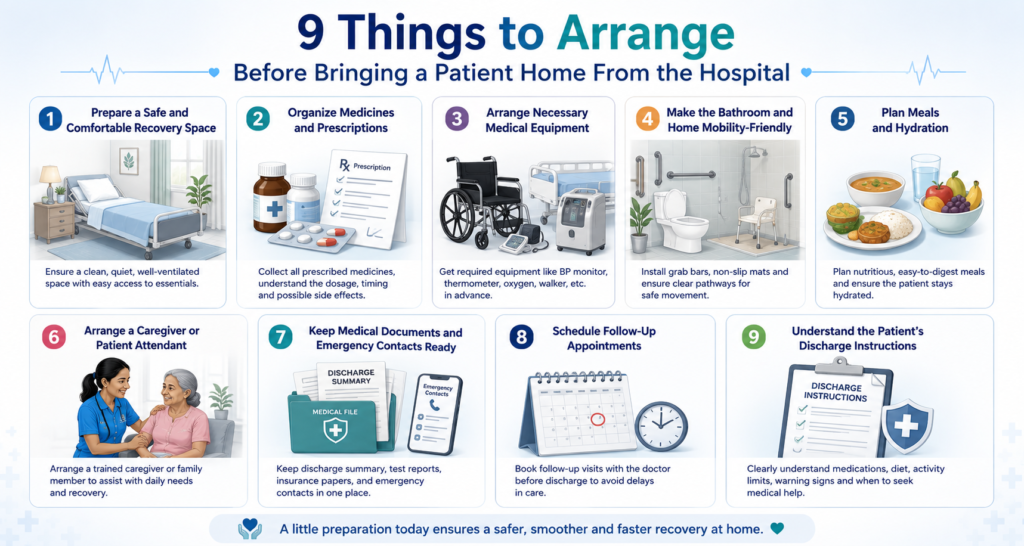
Here is a practical checklist of the most important things to arrange before the patient leaves the hospital.
1. Prepare a Safe and Comfortable Recovery Space
At first, it is essential to prepare a comfortable bed where the patient can convalesce comfortably. Place the bed in a convenient place for the patient, considering the possibility of the patient’s access to the nearest toilet.
The room where the patient will stay should have:
- Good lighting and air circulation;
- Be kept clean and clear of superfluous objects;
- Furniture and other objects that the patient will need during the convalescence at hand;
- Leave enough space for the equipment required for the patient’s needs;
- Clear the way of loose floor coverings and electric cords that can cause the patient to trip and fall.
2. Organize Medicines and Prescriptions
Before discharge, collect all prescribed medicines and make sure you understand how they should be taken. Ask the healthcare team about the correct dosage, timing, and whether any medicines the patient was previously taking should be continued or stopped.
It can help to maintain a written medication schedule showing:
- Medicine names
- Dosage
- Timing
- Special instructions
Keep prescriptions and medical records accessible. Do not change or stop a medicine without medical advice.
3. Arrange Necessary Medical Equipment
Depending on the patient’s condition and doctor’s recommendations, certain medical equipment may be needed at home.
This may include:
- A walker or wheelchair
- A hospital or recovery bed
- Oxygen equipment, if prescribed
- A blood pressure monitor
- A pulse oximeter
- A commode chair
- Other doctor-recommended equipment
The right medical home care services and equipment arrangements depend on the individual’s recovery needs. Always confirm with the healthcare provider which equipment is necessary and how it should be used safely.
4. Make the Bathroom and Home Mobility-Friendly
Falls can be a concern after hospital discharge, particularly for patients with weakness or limited mobility. Making the bathroom and walking areas safer can help reduce unnecessary risks.
Consider arranging:
- Grab bars where appropriate
- Non-slip bathroom surfaces
- A shower chair if needed
- A raised toilet seat
- Clear walking paths
- Handrails on stairs
- Proper lighting throughout the home
These changes can make movement easier and support safer daily routines during recovery.
5. Plan Meals and Hydration
The patient’s diet needs to be adjusted according to the doctor’s or dietitian’s recommendations. The meals have to be planned ahead of time to help the patient cope better during the first few days at home. It is essential to have access to water at all times and limit the patient to fluids and food that are suitable for their health condition. Meals can also be prepared in advance to reduce the caregiver’s burden. If unsure about the patient’s diet and nutrition, it is better to ask medical staff for advice than assume that the patient’s condition requires a certain disease-specific diet.
6. Arrange a Caregiver or Patient Attendant
Some patients may need additional help after returning home. A patient attendant at home can be useful when someone has limited mobility, needs assistance with bathing or dressing, requires help with meals, or cannot manage daily routines independently.
Additional support may also be helpful when:
- An elderly patient lives alone.
- Family members cannot provide continuous care.
- The patient needs regular assistance with personal activities.
- Recovery temporarily limits independence.
It is also important to understand the difference between an attendant and a nurse. A patient attendant generally helps with daily activities and personal care, while home nursing care involves professional nursing support within the nurse’s appropriate clinical scope.
The type of support needed should depend on the patient’s condition, discharge instructions, and individual care requirements.
7. Keep Medical Documents and Emergency Contacts Ready
Keep important information together in one accessible place. This can save valuable time if the family needs to contact a doctor or seek medical help.
Your documents folder should include:
- Hospital discharge summary
- Prescriptions
- Test reports
- Doctor’s contact details
- Hospital contact number
- Emergency contact numbers
- Insurance or medical documents, if applicable
- A current list of medicines
Make sure the primary caregiver and other family members know where these documents are kept.
8. Schedule Follow-Up Appointments
Before being discharged from the hospital, it is important to ensure the time of the patient’s return to the hospital for the follow-up appointment with the physician. Make sure to write notes regarding the date and time of the appointment, as well as organize transport if needed.
It is important to keep all necessary reports and documentation relevant for the appointment in handy reach. I would also ask if there are contacts to call in the case the patient’s condition worsens before the day of the appointment.
The follow-up appointments keep the family updated on what to do next in the rehabilitation process.
9. Understand the Patient’s Discharge Instructions
Do not leave the hospital until the family or caregiver clearly understands the discharge instructions. Ask questions whenever something is unclear.
Important instructions may include:
- How and when to give medicines
- Activity restrictions
- Wound or dressing care, if applicable
- Dietary instructions
- Physiotherapy or exercise guidance
- Warning signs to watch for
- Follow-up schedules
- When to contact the doctor
For patients who require specialized support, such as patient tracheostomy care, the family should receive appropriate instructions and arrange qualified assistance where needed.
Hospital Discharge Home Care Checklist
Use this hospital discharge home care checklist before taking the patient home:
- Safe and comfortable recovery room prepared
- Medicines purchased and organized
- Medical equipment arranged, if required
- Bathroom and walking areas made safer
- Meals and hydration planned
- Caregiver or patient attendant arranged, if needed
- Medical documents collected
- Emergency contacts saved
- Follow-up appointment scheduled
- Discharge instructions clearly understood
- Transportation home arranged
- Family members were informed about the patient’s care routine.
Reviewing this checklist before discharge can help avoid last-minute problems and make the transition into post-hospital care at home more organized.
What Should You Ask the Doctor Before Taking a Patient Home?
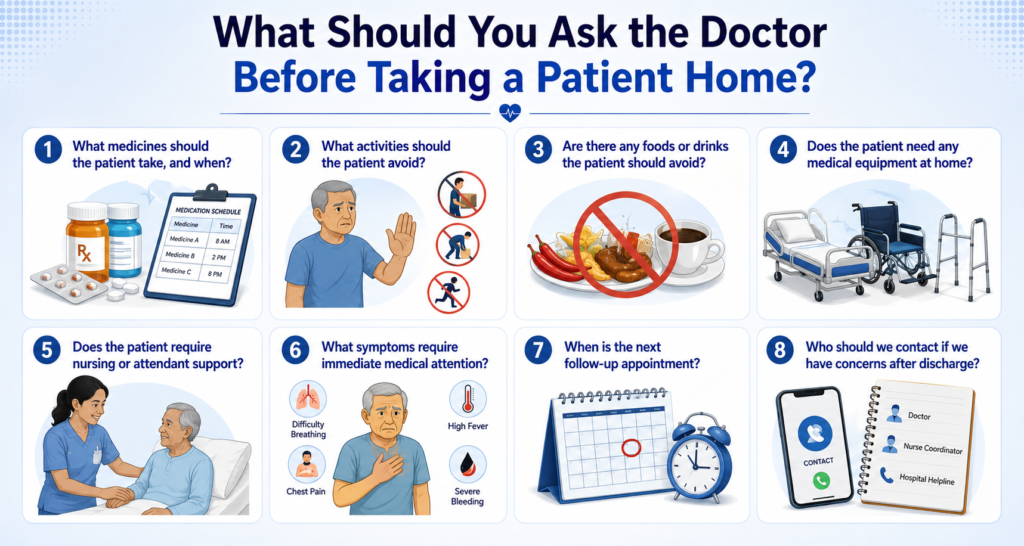
Before bringing the patient home, ask clear questions about their recovery and daily care needs.
- What medicines should the patient take, and when?
- What activities should the patient avoid?
- Are there any foods or drinks the patient should avoid?
- Does the patient need any medical equipment at home?
- Does the patient require nursing or attendant support?
- What symptoms require immediate medical attention?
- When is the next follow-up appointment?
- Who should we contact if we have concerns after discharge?
Writing down the answers can help family members follow the care plan more confidently.
Also read: Patient Attendant vs. Nurse in Jaipur
When Should You Consider Professional Home Care After Hospital Discharge?
Professional support may be useful when a family’s care responsibilities are more than they can safely manage alone. Home care after hospital discharge can be considered when the patient needs regular assistance with daily activities or requires structured support during recovery.
Professional care may be helpful when:
- The patient has limited mobility.
- Family members work or cannot stay throughout the day.
- The patient requires ongoing nursing support.
- An elderly person needs supervision.
- Recovery requires regular assistance and routines.
- The family feels unable to manage the patient’s needs independently.
Depending on the situation, support may include a patient attendant at home, home nursing care, or other appropriate patient care services. Some families may also require 24-hour home care services or a 24-hour bedside attendant when continuous assistance is genuinely needed.
Why Choose HomeCare24 for Post-Hospital Care?
The period after hospital discharge can be challenging for families, particularly when they are trying to balance a patient’s recovery needs with work and other responsibilities. HomeCare24 can help families explore suitable support options for managing the transition from hospital to home.
Depending on individual requirements, support may include patient attendants for daily assistance, nursing care at home where clinically appropriate, and help with personal care and everyday routines. This can be particularly relevant for recovering patients and families arranging elderly care at home.
HomeCare24 focuses on care arrangements based on the patient’s individual needs rather than a one-size-fits-all approach. Families in Jaipur looking for home healthcare services may consider appropriate support based on the patient’s condition and care requirements.
The level and type of care should always be guided by the patient’s needs and healthcare instructions. Whether a family needs assistance with daily routines, elderly care services at home, or nursing care at home in Jaipur, planning support before discharge can make recovery at home easier to manage.
Conclusion
Home discharge does not mean that patients are ready for discharge; they require further rehabilitative treatment at home, starting immediately after discharge.
Such procedures, events, care, preparations, and even home improvements are made before discharge. The degree of care and help provided is usually specified by a doctor and can be based on the patient’s needs and the doctor’s orders.
Patients who want to recover at home under the constant care and supervision of their loved ones after discharge from the hospital have to consider many things. For example, some people can recover at home on their own, while those with certain diagnoses or conditions need professional assistance for their rehabilitation. Home care agencies like HomeCare24 can assist in selecting and introducing a professional caregiver for home patient care after discharge which is possible in many cases. The care provider will take over some responsibilities and provide skilled help and support throughout the rehabilitation process.
FAQs About Bringing a Patient Home From the Hospital
1. What are the 7 steps of patient safety?
Common patient safety principles include identifying the patient correctly, communicating clearly, managing medicines safely, preventing infections, reducing fall risks, following proper care instructions, and knowing when to seek medical help. Specific safety needs may vary depending on the patient’s condition.
2. How to attract patients to a hospital?
Hospitals can attract patients by offering accessibility, effective communication, qualified doctors, reliable services, memorable patient experiences, and informative education to their customers. However, the most important ways of attracting patients are building patients’ trust via effective treatment and memorable experiences.
3. What are some good things to bring to a hospital patient?
Useful items may include comfortable clothing, personal hygiene products, approved snacks if permitted, reading materials, and essential documents. Always check hospital rules and the patient’s medical restrictions before bringing food, flowers, or other items.
4. What should you give someone coming home from the hospital?
Practical support is often most useful. You might provide easy-to-manage meals, help with household tasks, transportation, or assistance with daily routines. Make sure any food or care-related support follows the patient’s discharge instructions and medical requirements.
5. How can HomeCare24 help after hospital discharge?
HomeCare24 can help families explore appropriate home care support after discharge, including assistance with daily routines, patient attendant services, and nursing support where suitable. Care arrangements should be based on the patient’s individual needs and healthcare instructions.