Need Help?




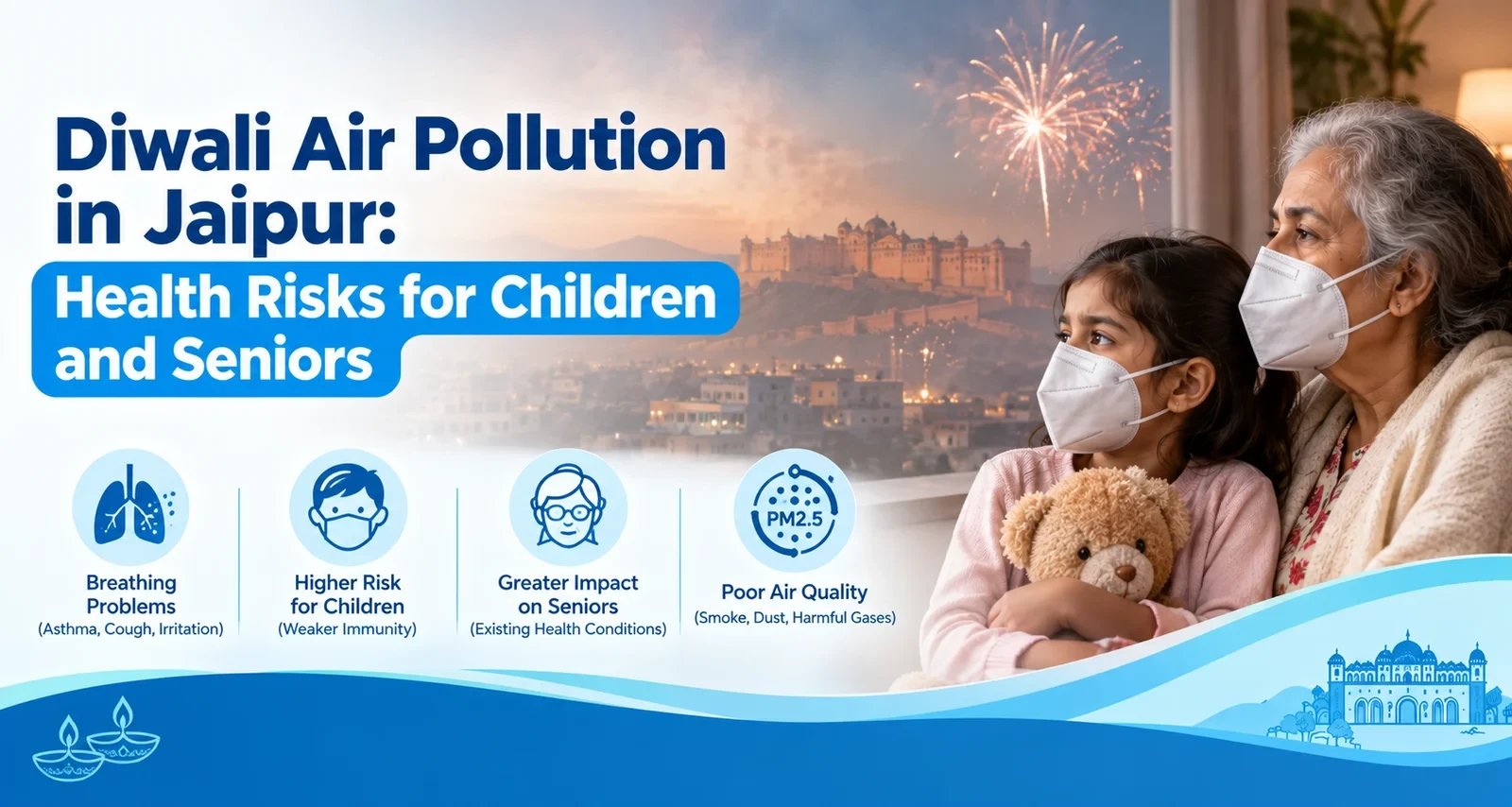
Diwali air pollution is a severe medical situation. Jaipur recorded an AQI of 376 on Diwali night 2025. The outside air becomes genuinely dangerous.
Kids under 14 and adults over 60 take the maximum hit. They face the highest Diwali pollution health risks from post-Diwali air. Their lungs cannot filter the PM2.5 spike. Healthy adults might just cough. But older bodies struggle badly with that toxic load.
If you have an elderly parent at home, you cannot ignore dropping air quality. We are going to discuss some medical risks here in this guide. We will also discuss practical precautions and explain when professional home care makes sense.
Jaipur Air Quality During Diwali: What the Numbers Say
The data makes one thing very clear. Jaipur is definitely not a safe haven when it comes to Diwali pollution. The city recorded an AQI of 376 on Diwali 2025 according to Time of India. This specific reading actually places the city firmly in the “poor” air quality category, rather than “very poor”. But, that technicality does not matter much because the air outside remains highly toxic for anyone breathing it.
National figures show an even darker trend across the country. A Climate Trends analysis of CPCB data revealed that PM2.5 levels rose from 156.6 µg/m³ right before Diwali to 233.5 µg/m³ on the main day. Right after the festival, it hit a massive 488 µg/m³. That was the worst pollution spike recorded in the last five years.
To understand how dangerous this is, you just have to look at global health standards. The World Health Organisation caps the safe annual limit for PM2.5 at a mere 5 µg/m³. As a result, breathing the post-Diwali night air in Jaipur exposes your lungs to pollution that is roughly 50 times above what the WHO considers safe.
Here is a table showing what different AQI levels mean for sensitive groups:
| AQI Range | Category | Risk for Children and Seniors |
| 0 to 50 | Good | No concern |
| 51 to 100 | Satisfactory | Minor breathing discomfort in very sensitive individuals |
| 101 to 200 | Moderate | Breathing discomfort for those with asthma, lung disease |
| 201 to 300 | Poor | Respiratory issues likely. Children and elderly should limit outdoor time |
| 301 to 400 | Very Poor | Serious risk of breathing difficulty. Stay indoors |
| 401 and above | Severe / Hazardous | Emergency conditions. Immediate health effects expected |
Health Risks for Children from Diwali Pollution
Children breathe much faster than adults. And this is the actual problem. More breathing speed means more polluted air gets pulled in every minute. And small airways fail to filter it out.
Safdarjung Hospital doctors pointed this out. PM2.5 particles are smaller than a hair strand. They travel through airways directly into the blood. Children with asthma or allergies suffer extreme sensitivity. PM2.5 exposure brings heavy respiratory inflammation.
The risks for children during Diwali pollution include:
- Asthma attacks and chest tightness: Firecracker smoke is a known asthma trigger. Children who have never had an asthma episode can develop one for the first time on a high-pollution night.
- Eye and throat irritation: Sulfur dioxide and nitrogen oxides from crackers stay at eye level for a child. Redness, itching, and sore throat are common the morning after.
- Disturbed sleep and restlessness: Toxic fumes affect the nervous system too. High-decibel fireworks add to this, causing restlessness and sleep issues in children under 5.
- Long-term lung development impact: Children exposed repeatedly to high PM2.5 levels during their growing years can have reduced lung capacity as adults.
And, in fact, the risk is not limited to children with existing conditions. AQI levels above 300 cause respiratory issues even in healthy individuals. For children under 10, the threshold for harm is lower than this.
Good home childcare services can help manage this better. Having a trained professional at home during the days around Diwali means someone is monitoring the child’s breathing, hydration, and physical response to the air quality.
Air Pollution Safety Risks for the Elderly During Diwali
Old people face a very different danger from Diwali air pollution. Their immunity works slowly now. And lung tissues lose stretch. Many already have COPD or diabetes. The polluted air makes these diseases much worse.
Doctors warn about fine cracker dust going deep into the lungs. This dust stays in the blood for days. It causes internal swelling. Asthma attacks happen fast. Old people face the highest Diwali pollution health risks from post-Diwali air.Their aging bodies cannot fight this heavy toxicity at all.
What this looks like at home:
- Breathing difficulty and wheezing: This can come on slowly. An elderly person may not notice their breathing getting more laboured over three to four hours.
- Cardiac strain: PM2.5 directly raises blood pressure and increases heart rate. For seniors already on cardiac medication, this is a genuine emergency risk.
- Dizziness and confusion: Low oxygen due to airway irritation can cause sudden disorientation in elderly people, especially those above 70.
- Worsening of existing conditions: Conditions like hypertension, COPD, and kidney disease all get harder to manage when the body is fighting toxic air.
The government tells old people to stay inside on Diwali night. Activity levels must stay low. That advice is good. But staying inside without medical monitoring is not safe either.
Professional elderly care services at home make a great difference here. A trained home nurse tracks vitals. Medicines are managed properly. They stay ready to respond if health drops suddenly.
Diwali Pollution Precautions: You Need to Know
Air Pollution Prevention Tips for Children:
- Keep them indoors from 8 PM to 11 PM on Diwali night. That is when ground-level pollution is highest.
- Use N95 masks if they must go outside. Cloth masks do not filter PM2.5.
- Keep windows and doors shut. Use wet towels at the base of doors if crackers are being used nearby.
- Run a HEPA air purifier in the bedroom, especially for children under 5.
- Give them more fluids than usual. Water and warm liquids help flush toxins.
Air Pollution Safety Tips for Elderly:
- Cancel evening outdoor plans entirely on Diwali night.
- Check inhalers, nebulizers, and cardiac medications are stocked before the festival.
- Keep oximeters handy. A reading below 95% is a sign to call a doctor immediately.
- Avoid smoking near elderly people during this period, even secondhand.
- Monitor breathing every two to three hours on Diwali night.
You must know one important thing. Diwali air pollution does not drop to safe limits immediately after the crackers stop. A big study across 71 Indian stations proved this fact. PM2.5 and PM10 levels keep increasing in the post Diwali period. They literally go much higher than the main festival day. You must keep all safety precautions active for two to three days. Just protecting your family on the main night is not enough.
An elderly parent at home might develop a bad cough or fever later. Breathing difficulty also happens very regularly. And getting a doctor checkup at home becomes the most practical option then. You do not need to take them outside in that toxic air. Going to a crowded hospital will only increase their Diwali pollution health risks from post-Diwali air.
Diwali Pollution Precautions Have Limits: What You Should Know
Here is the truth: masks and air purifiers only reduce your exposure. They never remove it completely.
Suppose someone in your family has a serious breathing issue. No indoor precaution will protect them fully when the outside AQI crosses 300. These PM2.5 particles are very fine. They easily come inside through small ventilation gaps.They enter around window frames and right under your doors.
Air purifiers definitely help. But a normal HEPA purifier in a small room has strict limits. It struggles badly if your house is in a crowded area with heavy cracker smoke outside. Older buildings normally have poor window sealing. The indoor air becomes almost 70 percent as toxic as the outside air within just two hours.
This matters a lot for very young babies and people above 75. Just buying better air gear for the house is not the safest option. If you have an elderly parent at home, you need proper monitoring. You really need a medically trained person present with them. They know exactly what warning signs to watch out for. This prevents serious Diwali pollution health risks from post-Diwali air before things go out of hand.
HomeCare24: Professional Home Care During Diwali in Jaipur
HomeCare24 provides trained healthcare staff across Jaipur for these exact situations. Diwali air pollution makes the main festival night very difficult. The next two days are also bad. Having a professional nurse or attendant at home makes a huge practical difference then.
Families with newborns need extra help. HomeCare24 gives baby care services right at your house. A trained professional watches the child’s breathing during peak pollution hours. You might have an elderly parent at home with heart or lung conditions. Home nursing services manage their medicines on time. They monitor breathing levels constantly. Immediate support is given if health drops. This reduces the Diwali pollution health risks from post-Diwali air completely.
Someone in the family might fall sick after the festival. You can book online diagnostic services at home directly. Blood oxygen tests and chest checks happen inside your room. A basic health review gets done without stepping outside into the toxic air.
HomeCare24 offers complete health care home services in Jaipur. You get nurses and doctors along with proper diagnostic support. Talk to the HomeCare24 team today. Arrange care for your family before the festival rush starts.
FAQs: Diwali Air Pollution
1. What is the AQI in Jaipur during Diwali?
Jaipur’s AQI has been in the 200 to 300 range on Diwali nights in recent years. The 2025 figure came in at 376, which is officially “very poor” and dangerous for children and seniors.
2. How long does Diwali pollution last in Jaipur?
Pollution levels stay elevated for two to three days after Diwali. Post-Diwali smog, combined with cooler winter air that traps particles close to the ground, keeps AQI in the poor range well into the following week.
3. Which children are most at risk from Diwali pollution?
Children under 5, children with asthma, and those with a history of respiratory issues are the most vulnerable. That said, healthy children above these ages are not completely safe either when AQI crosses 200.
4. Is it safe for elderly parents to go outside on Diwali night?
No, it is not. Even a 20-minute outdoor exposure at AQI 244 can trigger breathing issues in seniors with cardiac or lung conditions. The advice is straightforward: keep them indoors from evening onwards.
5. What should I do if an elderly person develops breathlessness after Diwali?
Do not wait. If breathing difficulty comes with low oxygen readings, call a doctor right away. A home doctor visit or booking online diagnostic services is safer than taking them to a hospital in polluted outdoor air.