 Need Help?



When a child gets a runny nose and starts coughing, we all think it is just a cold. And many times it is. But the problem is not the illness. The problem is us. We go to the medical store. We pick up a cough syrup. We wait two or three days thinking it will settle. And in some cases it does. But in some cases, that cough is not a cold at all. It is pneumonia. And by the time we figure that out, the child is already much worse than they should be.
Today we are going to explain how pneumonia vs common cold in children is different. Which signs mean stop waiting? And what you can do right now. If your child needs baby care services at home, you can contact our team at HomeCare24.
Pneumonia vs. Common Cold in Children: Key Differences
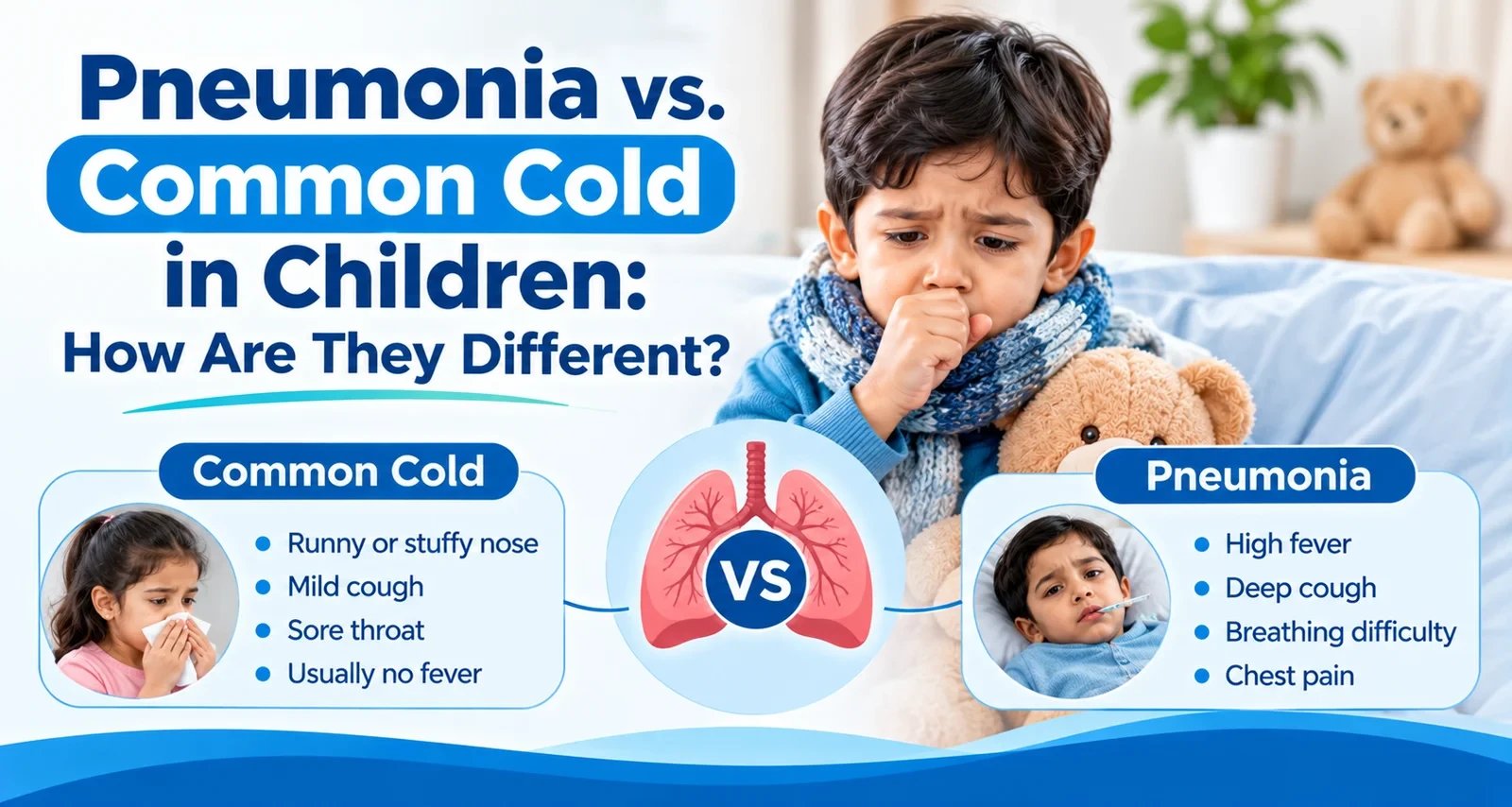
Pneumonia vs common cold in children is not about one being worse than the other. They are different illnesses that affect different parts of the body. Here’s how you can understand the difference.
| Feature | Common Cold | Pneumonia |
| Part affected | Nose, throat, sinuses | Lungs |
| Cause | Virus, Rhinovirus | Bacteria, virus, or fungi |
| Fever | Low grade, mild | High, does not come down with medicine |
| Cough | Mild, improves after a few days | Gets worse, may bring up colored mucus |
| Breathing | Normal | Fast, labored, painful |
| Duration | 7 to 10 days | Longer, worsens without treatment |
| Appetite | Reduced slightly | Refused entirely |
| Energy | Tired but active | Very low, hard to wake |
| Biggest sign | Runny nose | Breathing difficulty |
Pneumonia claims nearly 1 lakh children under 5 in India every year, according to experts cited by The Week in November 2025. India accounts for over 20% of global child pneumonia deaths. And a lot of those deaths happen because the family thought it was just a cold or a fever.
Read more: Cold and Cough in Winter
Common Cold Symptoms in Children
A cold in a child follows a pattern we all recognise. It comes on slowly. First a runny nose. Then some throat irritation. A cough that is mild and does not change much day to day. Low fever, if any, normally not above 101°F. The child is tired but still wants to be held, still looks at you, still cries when they want something.
That is a cold. It is uncomfortable. But the child improves. Day 3 or 4 is normally the worst of it.
- Runny or blocked nose, watery at first
- Sore throat
- Mild cough that stays mild
- Low-grade fever in some children
- Sneezing
- Still drinking fluids even if eating less
If none of this is improving after 10 days, that is the right time to arrange a home childcare service or a doctor assessment.
Pneumonia Symptoms in Children
Pneumonia symptoms in children, most of the time, start the same way as a cold. So we assume it is a cold and we treat it like one.
And then around day 3 or 4, the fever climbs. The cough changes. The breathing gets faster. And the tired child who was okay yesterday is now limp and refusing water. Early recognition is the one thing that changes outcomes.
Signs of pneumonia in kids:
- High fever with chills that does not respond to paracetamol
- Cough that gets worse after day 5
- Fast breathing. More than 50 breaths per minute in an infant under 1, more than 40 in a child aged 1 to 5
- Chest retraction. You can see the lower chest pulling inward when the child breathes in
- Grunting sound with each breath
- Coughing up yellow, green, or blood-tinged mucus
- Child refuses to eat or drink anything at all
- Very difficult to keep awake or get a response from
For children recovering at home from a respiratory infection, nursing care services can monitor vitals daily and catch any change before it gets worse.
Signs of Pneumonia in Kids: When a Cold Becomes Dangerous
A cold becomes pneumonia when the infection travels from the upper airway down into the lungs. This does not always happen. But when it does, the timing catches families off guard.
And we see that the child has a cold. Gets a little better. Then on day 4 or 5, they get worse again. That pattern is one of the clearest signs that something more is happening.
Child pneumonia warning signs that need same-day attention:
- Any breathing difficulty in a child under 2, no matter how mild it looks
- Fever that went away and then came back higher
- Bluish or pale tinge around the lips or fingertips
- Child becomes quiet and stops responding the way they normally do
- Chest retraction visible with each breath
- Cannot keep fluids down
None of these should be watched overnight to see what happens. A doctor checkup at home can assess a child the same day, at your door.
Breathing Problems in Children: What to Actually Watch For
Breathing problems in children are not that hard to spot. You do not need any machine or equipment. You just need to sit with the child and look at them for 30 seconds.
Count how many times the chest rises in 30 seconds. Double that number. A baby under one year should breathe around 30 to 40 times a minute. A child aged 1 to 5 should breathe around 20 to 30 times. If your count comes out much higher than that, the child is breathing too fast. That alone is a reason to call a doctor.
Watch the lower chest when the child breathes in. It should go outward. If it is going inward, like the skin below the ribs is being sucked in with each breath, that child is working too hard just to breathe. We call that chest retraction. It means the lungs are in trouble.
Both of these can be checked at home right now, without going anywhere. And if you need a diagnostic healthcare service to check oxygen levels or run a basic blood test, that can also come to your door.
How to Protect Children from Respiratory Infections
We cannot stop every virus from reaching our children. That is just not possible. But we can make sure the child’s body is strong enough to not let a small infection become a big one. And a lot of that comes down to things we do every day without thinking about them.
- The PCV vaccine is part of India’s government immunization schedule. Get it done on time. It directly reduces the risk of severe pneumonia.
- Breastfeed exclusively for the first six months if you can. A newborn’s immune system is still building. Breast milk gives it what it needs.
- Keep the child away from cigarette smoke. Not just direct smoking. Even sitting in a room where someone smoked an hour ago affects a young child’s airways.
- Wash hands before every feed and after every nappy change. This is small but it matters more than people realize.
- Feed the child properly. Undernutrition is the biggest reason children in India get severe pneumonia, according to NFHS-5 data. A child who is not eating enough has very little to fight an infection with.
For newborns in the first few weeks at home, newborn baby care at home helps families stay on top of the daily feeding and hygiene routines that keep a newborn safe during the most vulnerable period.
Also read: Why Baby Care Services at Home Are Ideal for Working Parents
HomeCare24: Baby Care and Home Care Services for Children in Jaipur
When a child is sick, and you are not sure how serious it is, the last thing you want to do is sit with a feverish baby in a hospital waiting room. HomeCare24 is a Jaipur-based home care team with 5+ years of experience and 500+ families served, available 24/7, including weekends and public holidays.
HomeCare24 provides these services for children and infants right at your door:
- Baby care services at home
- Newborn baby care at home
- Infant care services at home
- Home childcare services
- Nursing care services
- Doctor checkup at home
- Diagnostic healthcare services
- Home care support services
All our caregivers and nurses are background-verified before they come to you. One dedicated care coordinator handles everything from the first call to daily updates.
Call +91-8003888100 or visit homecare24.in to arrange care for your child today.
FAQs: Pneumonia vs Common Cold in Children
1. What is the main difference between pneumonia and a common cold in children?
Pneumonia and common cold in children affect different parts of the body. A cold stays in the nose and throat. Pneumonia goes into the lungs. That is why breathing changes with pneumonia and not with a cold.
2. How do I know if my child’s cough is from pneumonia?
Pneumonia symptoms in children include a cough that gets worse after day 5, high fever that medicine does not bring down, and breathing that is faster or harder than usual. A cold cough starts improving on its own by day 3 or 4.
3. Can a cold turn into pneumonia in a child?
A cold can turn into pneumonia, especially in children under 2. The infection starts in the upper airway and can travel down into the lungs. A warning sign is when the child seems to get better and then suddenly gets worse.
4. When should we see a doctor for a child’s cough in winter?
Doctor checkup at home should be arranged the same day if the child has fast breathing, visible chest retraction, high fever that is not going down, refusal to drink anything, or a bluish tinge around the lips. These are not signs to sleep on.
5. What is the fastest breathing check for pneumonia at home?
Count breaths for 30 seconds and multiply by two. More than 50 breaths per minute in an infant under 1, or more than 40 in a child aged 1 to 5, is fast breathing and needs a doctor the same day.


