Need Help?




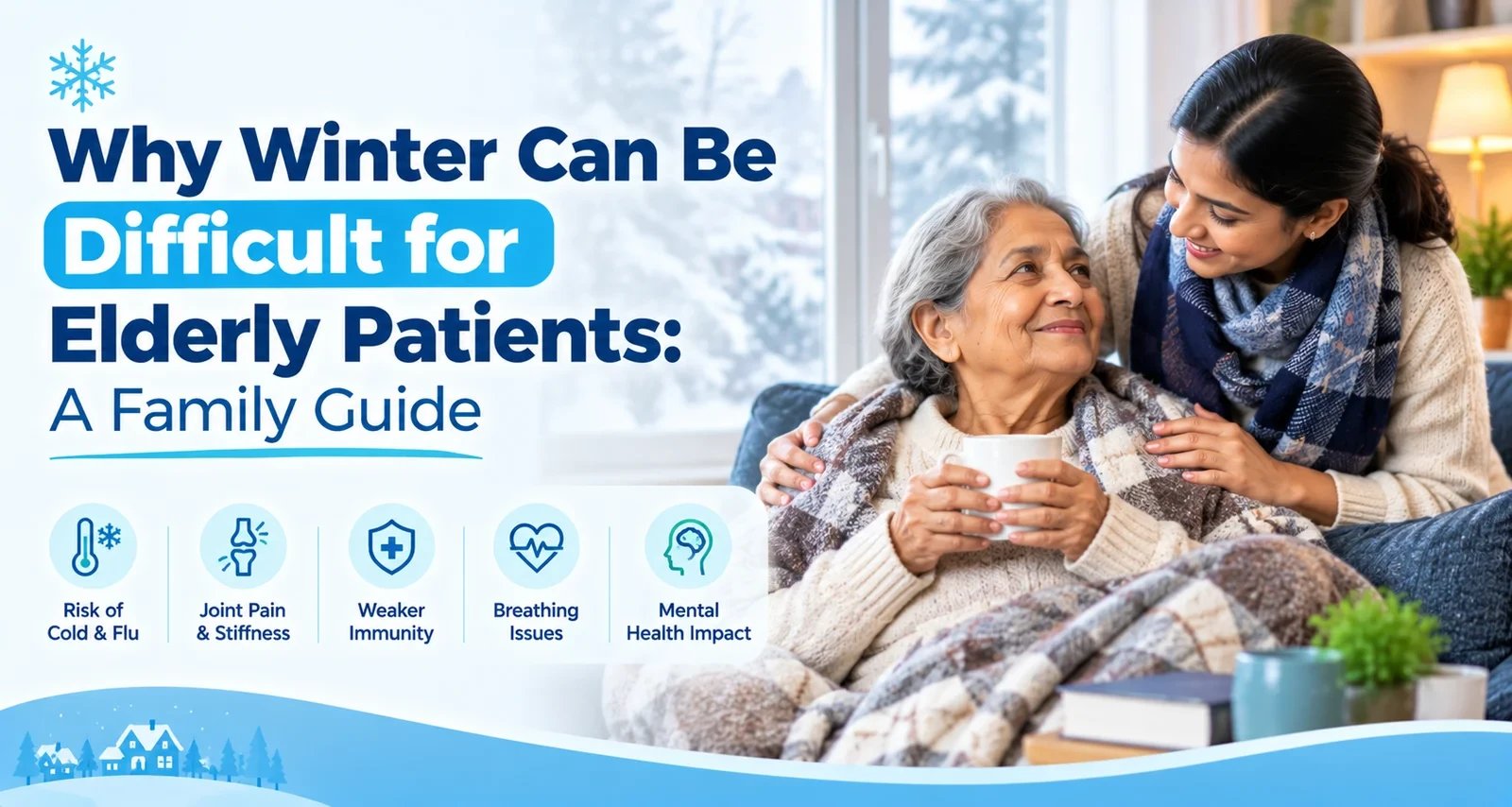
Winter can be difficult for elderly patients because the body at 75 gets cold very differently from how it did at 45. Like, joints hurt more. Blood pressure also becomes harder to control. And if you have seen this at home already, don’t worry, it’s very normal at this age only.
So in this guide, we will tell you what winter does to elderly patients, and how to get the right care in place before things get difficult.
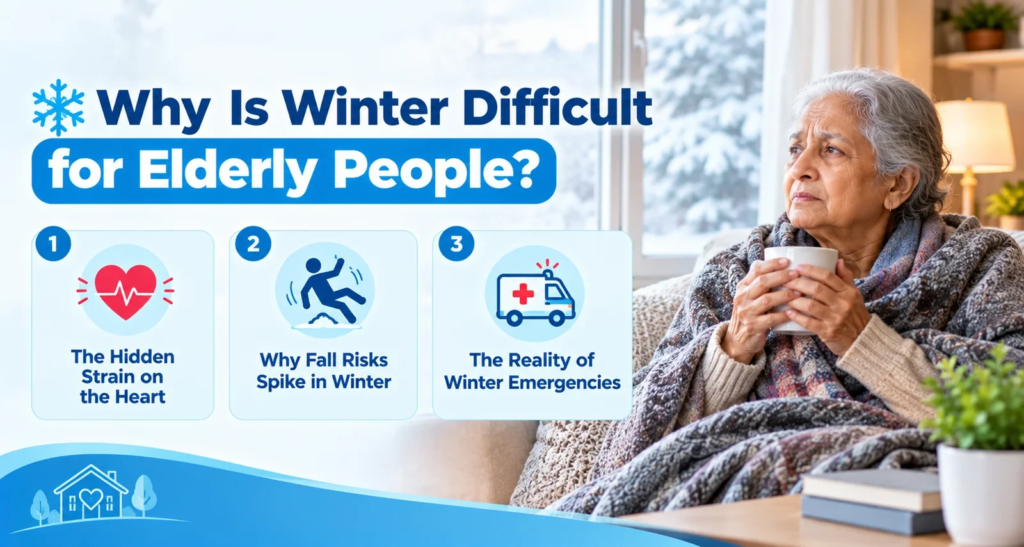
Why Is Winter Difficult for Elderly People?
Winter health problems in elderly people are very common. And almost every grandparent is there in this case.
1. The Hidden Strain on the Heart
The truth is, the cold hits entirely differently when you get older. A 75-year-old body just loses that natural ability to regulate heat and keep blood pressure steady. Infection resistance drops heavily during these months too. You know how a normal chest cold feels in your forties? It’s a completely different situation at 75. Cold air literally forces blood vessels to constrict. That means the heart has to pump twice as hard just to keep everything circulating properly. Put that extra physical stress on an older person who already deals with hypertension, and things can go south really fast.
2. Why Fall Risks Spike in Winter
Then they have to deal with the falling risk. The Indian Journal of Community Medicine found that fall prevalence among elderly people here hovers between 26 and 37 percent. That baseline number shoots up significantly in the winter. The cold weather stiffens up joint muscles completely, which slows down the body’s natural balance response.A grandparent who navigates the house perfectly well in September might suddenly slip in December just from getting out of a chair a bit too fast.
3. The Reality of Winter Emergencies
Look at the emergency rooms. AIIMS doctors see a massive jump in blood pressure and cardiac crises the second winter sets in. The science on this is pretty straightforward: cold weather shrinks the vessels, the heart works overtime to fix the flow, and all that pressure hammers whichever organ is already weak. If someone in your house is at risk for heart issues,do yourself a favor. Get your emergency critical care services sorted out now, well before the freezing weather hits.
Common Winter Health Problems in Elderly People
Here are the common conditions almost every old-age person has to face. Check if carefully.
| Health Problem | What Happens | Who Is at Higher Risk |
| Hypothermia | Body temperature drops below 95°F when the body cannot hold heat | All elderly, especially those alone at home |
| Joint pain and stiffness | Cold reduces joint lubrication and worsens arthritis | Elderly with existing arthritis or low bone density |
| Respiratory infections | Cold air irritates airways and worsens COPD and asthma | Elderly with existing lung conditions |
| Blood pressure spike | Blood vessels constrict in cold and BP rises sharply | Elderly with hypertension or heart disease |
| Falls and fractures | Balance problems increase and muscle response slows | All elderly patients, higher risk with osteoporosis |
| Dehydration | Elderly do not feel thirst in cold so water intake drops | All elderly patients |
| Low mood and isolation | Shorter days, less movement, fewer people around | Elderly living alone or with limited mobility |
The harsh reality is that most families only notice these red flags when things are already serious. If the cold is locking up their joints, home physiotherapy services are the smartest fix. It keeps them moving safely, and nobody has to drag them out into the freezing weather just to get a session done.
Read more: Different Types of Elder Care Services Available in India
Warning Signs to Watch in an Elderly Patient This Winter
You should watch for these warning signs in elderly patients every day this winter:
- The patient speaking very slowly or not making sense, which can be an early sign of hypothermia
- Shivering that does not stop even indoors
- Chest pain or difficulty breathing, even if mild
- Blood pressure noticeably higher than their usual numbers
- Joint pain so bad that the patient is not getting up from bed
- Any fall, even a minor one, because fractures in elderly patients are not always immediately visible
- Not eating properly or not drinking water through the day
- Becoming quiet and not interested in anything around them
None of these should be waited on. A routine health checkup at home tracks blood pressure and oxygen levels every day, so you catch problems early. And if you notice any of the above signs, a doctor visit at home near me can be arranged the same day.
Winter Care Tips for Senior Citizens at Home
The big medical stuff families think about is not what goes wrong in winter. The small daily things do. And nobody tells families this until something has already happened. For example:
- Keep the room warm but place heaters away from the patient. Elderly skin burns easily from direct heat.
- Make them drink water regularly even when they say they are not thirsty.
- Remove loose rugs and floor mats. Use skid-proof slippers inside the house at all times.
- Keep all prescribed medicines stocked two weeks in advance.
- For patients with breathing problems, durable medical equipment like oxygen concentrators should be set up and tested before winter begins.
- Patients on tracheostomy tube care at home need extra daily attention in winter. Cold dry air increases mucus in the tube and infection risk goes up with it.
When Home Care for Elderly Patients Becomes Necessary
Home care for elderly patients becomes necessary when the family cannot safely manage on their own anymore. A lot of families wait too long for this. They manage everything alone until something goes wrong at 2 AM and it becomes an emergency.
You need professional support when the patient cannot safely be left alone. That much is clear. What families miss is the point where the person handling everything at home is too exhausted to stay on top of medicines and monitoring. And if the patient recently came back from hospital after a winter health event, that recovery has medical requirements a family is not trained for.
A 24-hour bedside attendant is the first step, and families are surprised by the difference it makes. Having someone trained present through the night means medicines go on time and problems get caught early before they grow into something serious.
For patients with ongoing daily medical needs, nursing care at home covers wound dressing and injection support as part of one daily arrangement. 24 hours home care services are now available in Jaipur for families who need someone present through the night too.
Also read: 10 Best Elder Care Services in Jaipur
HomeCare24: Home Healthcare Services for Elderly Patients in Jaipur
Getting care arranged for elderly patients in winter is manageable when the right support is in place early. HomeCare24 is a Jaipur-based home care team with 5+ years of experience and 500+ families served, available 24/7 including weekends and public holidays.
HomeCare24 provides these home care services for elderly patients in your area:
- Nursing care at home
- Home physiotherapy services
- Doctor visit at home near me
- 24 hours bedside attendant
- Emergency critical care services
- Tracheostomy tube care at home
- Routine health checkup
- Durable medical equipment
- 24 hours home care services
All our nurses are GNM or B.Sc. qualified. We verify every caregiver’s background before they come to you. One dedicated care coordinator manages your family from the first call to daily updates.
Call +91-8003888100 or visit homecare24.in to arrange winter care for your elderly family member today.
FAQs: Winter Health Problems in Elderly People
1. Why do elderly patients get more sick in winter?
Because a 75-year-old body gets colds completely differently. Blood pressure jumps and immunity drops. People with heart issues or diabetes feel it almost instantly.
2. What are the early warning signs of hypothermia in an elderly person at home?
It’s not always obvious. Watch if they start talking really slow or stop making sense. Non-stop shivering while sitting indoors is another big one.
3. How can families manage elderly patient care at home without professional help in winter?
Just stick to the basics. Keep them warm, make them drink water, and check their BP daily. But for wound care, you need a professional.
4. When should we call for emergency critical care services at home?
The second you see unusual chest pain or breathing trouble. Or a bad fall. Don’t wait around, just call emergency critical care services immediately.
5. Are home physiotherapy services helpful for elderly patients in winter specifically?
Yes, the cold really locks up older joints. Booking home physiotherapy services keeps them moving safely indoors. It brings the fall risk way down.