Need Help?



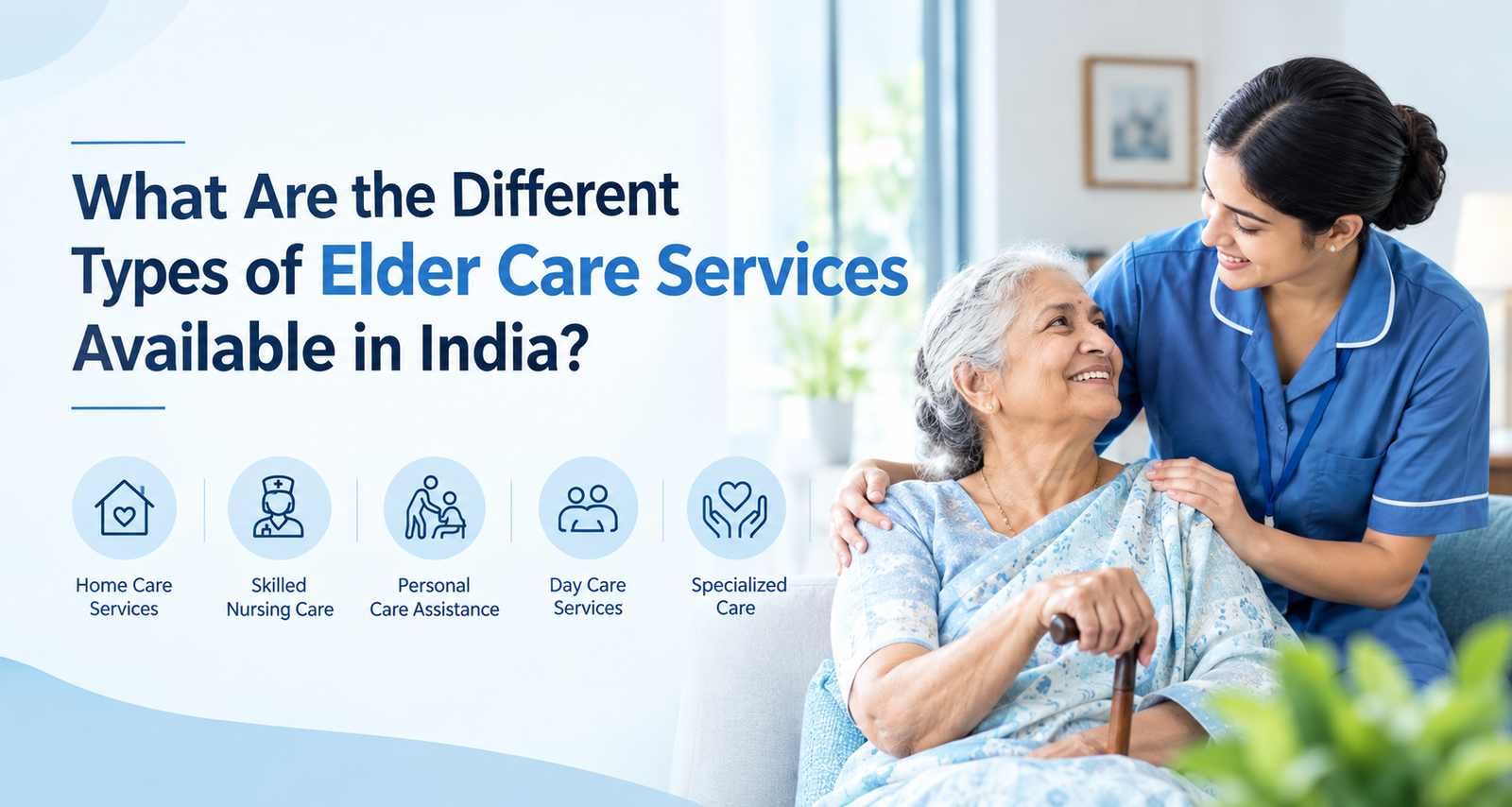
As people age, they may need help with health, moving around daily, getting better habits, and feeling connected. Elder care services in India offer kinds of help that are made to keep older people comfortable, safe, proud, and able to live their own lives. Depending on what each person needs, seniors can get help at hospitals, in places in assisted‑living communities, or in residential care homes.
The right kind of care depends on many things. These include the senior’s health, how well they can move, how much they can do on their own, how they think, and how much family help there is. From daily help and nursing to physical therapy help for dementia and care after a hospital stay, elder care can be made to fit each person.
India’s National Programme for Health Care of the Elderly (NPHCE) also says that preventive, curative, rehabilitative, day‑care, and home‑based care are all part of elder care health care.
What Are Elder Care Services in India?
Elder care services are professional or supportive services that help older adults manage their healthcare needs, daily activities, mobility, recovery, safety, and emotional well-being.
It is useful to distinguish between medical and non-medical care:
- Medical care can involve nursing, visits with doctors giving medicines as prescribed, taking care of wounds, keeping an eye on health conditions, rehabilitation, and other services that are needed based on advice.
- Non-medical care includes help with bathing, grooming, eating, moving around company, support with household tasks, and assistance with regular activities.
A key idea in care is aging in place—helping older adults stay safely and comfortably in their own homes and communities for as long as possible. NITI Aayog sees home-based care as a choice or addition to care and believes it can help with daily living activities and also train caregivers.
India’s public healthcare system offers services at different levels, including primary health centers, community health centers, district hospitals, and regional geriatric centers.
What Are the Different Types of Elder Care Services Available in India?
There is no single model of care suitable for every senior. The following are some of the major elderly care services available in India.
1. Elder Care at Home
Elder care at home allows seniors to receive assistance in familiar surroundings rather than moving immediately to a residential facility.
Depending on the care plan, home care for elderly people may include:
- Assistance with bathing, dressing, and grooming
- Feeding and meal-related assistance
- Walking and mobility support
- Medication reminders
- Basic observation and routine support
- Help with everyday activities
- Companionship and social interaction
Elderly home care services can be particularly useful when a senior is comfortable at home but needs some additional support with daily routines.
Home-based care is also increasingly recognized as an important part of India’s senior-care ecosystem. NITI Aayog recommends developing home-based care models as an alternative or supplement to institutional care.
2. Home Nursing Services for Elderly
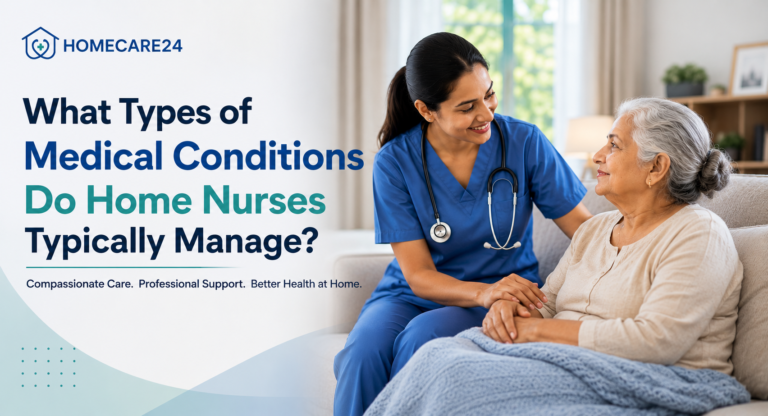
Home nursing is different from general caregiving because it involves professional nursing support for specific healthcare needs.
A trained nurse may assist with services such as:
- Monitoring vital signs
- Administering prescribed medications
- Wound-care support when clinically appropriate
- Caring for bedridden or medically dependent seniors
- Post-hospitalization care
- Supporting recovery according to the healthcare professional’s instructions
For example, a senior who simply needs help with bathing may require a caregiver, while someone who requires ongoing nursing procedures may need a qualified nurse.
NPHCE also includes home-based care and rehabilitation within its broader geriatric-care framework.
3. Personal Care and Daily Living Assistance
Some seniors remain medically stable but require help with everyday activities. These services are often called Activities of Daily Living (ADLs).
ADLs are basic tasks a person normally performs every day, such as
- Bathing
- Dressing
- Grooming
- Toileting
- Eating
- Walking or transferring
- Getting in and out of bed
A caregiver can provide practical assistance while allowing the senior to remain as independent as possible. This distinction is important: the purpose of care should be to support independence rather than unnecessarily take over activities the senior can still perform safely.
4. Physiotherapy and Rehabilitation for Seniors
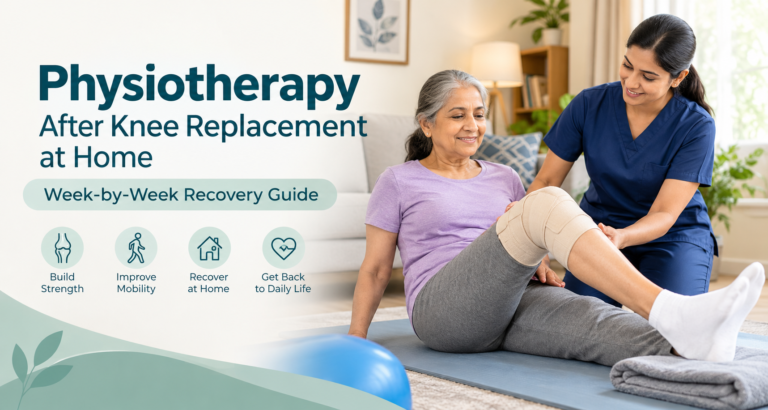
Ageing, surgery, injury, prolonged bed rest, or certain health conditions can affect strength, balance, and mobility. Home physiotherapy services can help seniors follow an appropriate rehabilitation program under professional supervision.
Depending on the assessment, elderly physiotherapy may focus on:
- Strength and flexibility
- Balance and mobility
- Recovery after surgery or injury
- Functional movement
- Fall-risk reduction
- Rehabilitation after hospitalization
Government geriatric-care guidelines include physiotherapy and rehabilitation, including domiciliary rehabilitation support for certain homebound or bedridden elderly people.
5. Dementia and Alzheimer’s Care
Seniors who live with dementia or Alzheimer’s disease may need a structured and consistent approach to care.
Specialized support can involve:
- Supervision and assistance with safety
- Help maintain daily routines
- Reminders for medication and appointments
- Help with personal care
- Proper cognitive and social engagement
- Communication with family members
Dementia caregivers do not replace doctors or other healthcare professionals. Instead, dementia caregivers give day‑to‑day support. Help families keep a safe and predictable environment.
Patience and consistency are especially important because changes in routine can be difficult for people experiencing impairment.
6. Post-Hospitalization and Recovery Care
Returning home after hospitalization can be challenging, particularly for an older adult who has become weak or less mobile.
Post-hospitalization care may involve:
- Assistance with prescribed medication schedules
- Mobility and transfer assistance
- Support with daily activities
- Wound-care support when clinically directed
- Monitoring recovery and reporting concerns
- Assistance following medical or physiotherapy instructions
- Coordination with family members and healthcare professionals
This type of support can be relevant after surgery, fractures, prolonged illness, or other hospital stays.
The objective is not to replace clinical follow-up but to help the senior safely manage the transition from hospital to home.
7. Palliative and End-of-Life Care
Palliative care focuses on comfort, symptom management, dignity, and quality of life for people living with serious or advanced illness.
For an older adult, palliative support may involve:
- Appropriate pain and symptom management
- Medical and nursing support
- Emotional support
- Family communication
- Comfort-focused care
Palliative care is different from routine elder care because it specifically addresses the needs associated with serious illness and comfort-focused treatment. Clinical decisions should be made by appropriate healthcare professionals.
8. Companionship and Emotional Support
Elder care is not limited to physical or medical needs. Social connection can also be important for an older person’s overall well-being.
Companionship services may involve:
- Conversation and social interaction
- Accompanying seniors during appointments
- Supporting hobbies and preferred routines
- Helping with appropriate activities
- Providing social presence at home
NITI Aayog’s senior-care recommendations recognize the importance of psychosocial support and highlight issues such as social isolation and reduced family support among some older adults.
9. Assisted Living and Residential Elder Care
Not every older person can get all the help they need while staying at home. Assisted living facilities and homes for citizens and communities that offer residential care give more organized help. These choices can be very different from each other. Assisted living is a place where people live and also get help with tasks. Senior homes are places where older people live and get levels of help. Intensive or continuous care is an organized way to help older people who have big medical or physical needs. Residential care might be the choice for an older person who needs regular help or supervision that family members are not able to provide at home.
What Is the Difference Between Elder Care, Home Nursing, and Caregiver Services?
Understanding the difference can make it easier for families to choose the appropriate service.
| Service | Main Purpose | Suitable For |
| Elder Care | Overall daily and supportive care | Seniors needing routine assistance |
| Caregiver Services | Personal and daily-living assistance | Seniors needing help with ADLs |
| Home Nursing | Clinical and nursing support | Seniors with specific nursing needs |
| Physiotherapy | Mobility and rehabilitation | Seniors recovering or experiencing mobility issues |
| Assisted Living | Structured residential support | Seniors requiring ongoing assistance |
The exact scope of services can vary between providers, so families should always confirm what is included before starting care.
Which Elder Care Service Is Right for Your Loved One?
The best option depends on the senior’s current condition and level of independence.
1. Consider Home Elder Care If:
- The senior is comfortable and safe at home.
- They need assistance with everyday activities.
- Family members need additional professional support.
2. Consider Home Nursing If:
- The senior has ongoing nursing requirements.
- Professional clinical support is needed at home.
- The person is recovering from illness or hospitalization.
3. Consider physiotherapy if:
- Mobility or strength has declined.
- The senior is recovering from surgery or injury.
- A healthcare professional recommends rehabilitation.
4. Consider Assisted Living If:
- Consistent daily supervision is required.
- Family members cannot provide regular support.
- The senior would benefit from a structured living environment.
5. Consider Specialized Dementia Care If:
- Cognitive impairment affects daily safety.
- The senior needs consistent supervision and structured routines.
What Should You Check Before Choosing an Elder Care Service?
Before selecting a provider, families should look beyond the advertised service list. Check whether the provider can actually match the senior’s specific requirements.
Consider:
- Caregiver or nurse qualifications
- Experience with elderly patients
- Service availability and working hours
- Emergency support procedures
- Personalized care planning
- Communication with family members
- Background verification
- Reviews and reputation
- Transparent pricing
- Availability of specialized services
- Regular monitoring and feedback
For medical requirements, also clarify who is responsible for clinical decisions and how the service coordinates with the senior’s doctor.
Why Is Professional Elder Care Important for Seniors?
Professional care can provide consistent assistance while helping families manage the practical challenges of supporting an aging loved one.
Depending on the individual’s needs, professional care can offer:
- Assistance with daily activities
- More consistent support at home
- Better continuity between family and professional caregivers
- Help with recovery and rehabilitation
- Support for family members and working caregivers
- Professional monitoring when required
- A familiar home environment for aging in place
NITI Aayog specifically recommends strengthening home-based care and developing trained home-care providers who can support ADLs, medication routines, assistive devices, and family caregivers.
Why Choose HomeCare24 for Elder Care at Home?
HomeCare24 provides home-based support designed around the individual needs of seniors and their families.
Depending on the care requirement, HomeCare24 can support families with services such as:
- Professional elder care at home
- Caregiver and nursing support
- Assistance with daily activities
- Routine Health Checkup
- Doctor Checkup at Home
- Bedside Attendant Services
- Critical Care Services
- Home Physiotherapy Services
- 24-Hour Nursing Care at Home
- Post-hospitalization support
The goal is to make home-based care more organized while focusing on the senior’s comfort, dignity, safety, and individual care requirements.
Frequently Asked Questions About Elder Care Services in India
1. What are the main types of elder care services in India?
The main types include home elder care, home nursing, personal-care assistance, physiotherapy and rehabilitation, dementia care, post-hospitalization care, palliative care, companionship, assisted living, and residential senior care.
2. What is the difference between elder care and home nursing?
Elder care is a broad category that can include daily living, personal, social, and supportive assistance. Home nursing is more clinically focused and is provided by qualified nursing professionals according to the senior’s healthcare needs.
3. Is elder care available at home in India?
Yes. Home-based elderly care is an established part of India’s broader senior-care ecosystem. Government geriatric-care programs include home-based care where required, while private providers may offer caregiving, nursing, physiotherapy, and related services at home.
4. What does an elderly caregiver do?
An elderly caregiver may assist with bathing, dressing, grooming, feeding, mobility, daily routines, companionship, and other non-clinical activities. The exact responsibilities depend on the care plan and the caregiver’s qualifications.
5. When does an elderly person need professional home care?
Professional care may be useful when a senior struggles with daily activities, has reduced mobility, needs support after hospitalization, lives alone, requires regular assistance, or when family members cannot provide consistent care.
6. What type of care is best for bedridden elderly people?
Bedridden seniors may need a combination of services depending on their condition, such as nursing care, personal assistance, positioning and mobility support, physiotherapy, and medical supervision. The appropriate care plan should be determined according to the person’s clinical and functional needs.
7. How much does elderly home care cost in India?
There is no single standard price. Cost can vary according to the senior’s condition, number of hours, caregiver or nurse qualifications, level of medical support, location, and services included. Families should request a clear care plan and pricing breakdown before starting services.