Need Help?



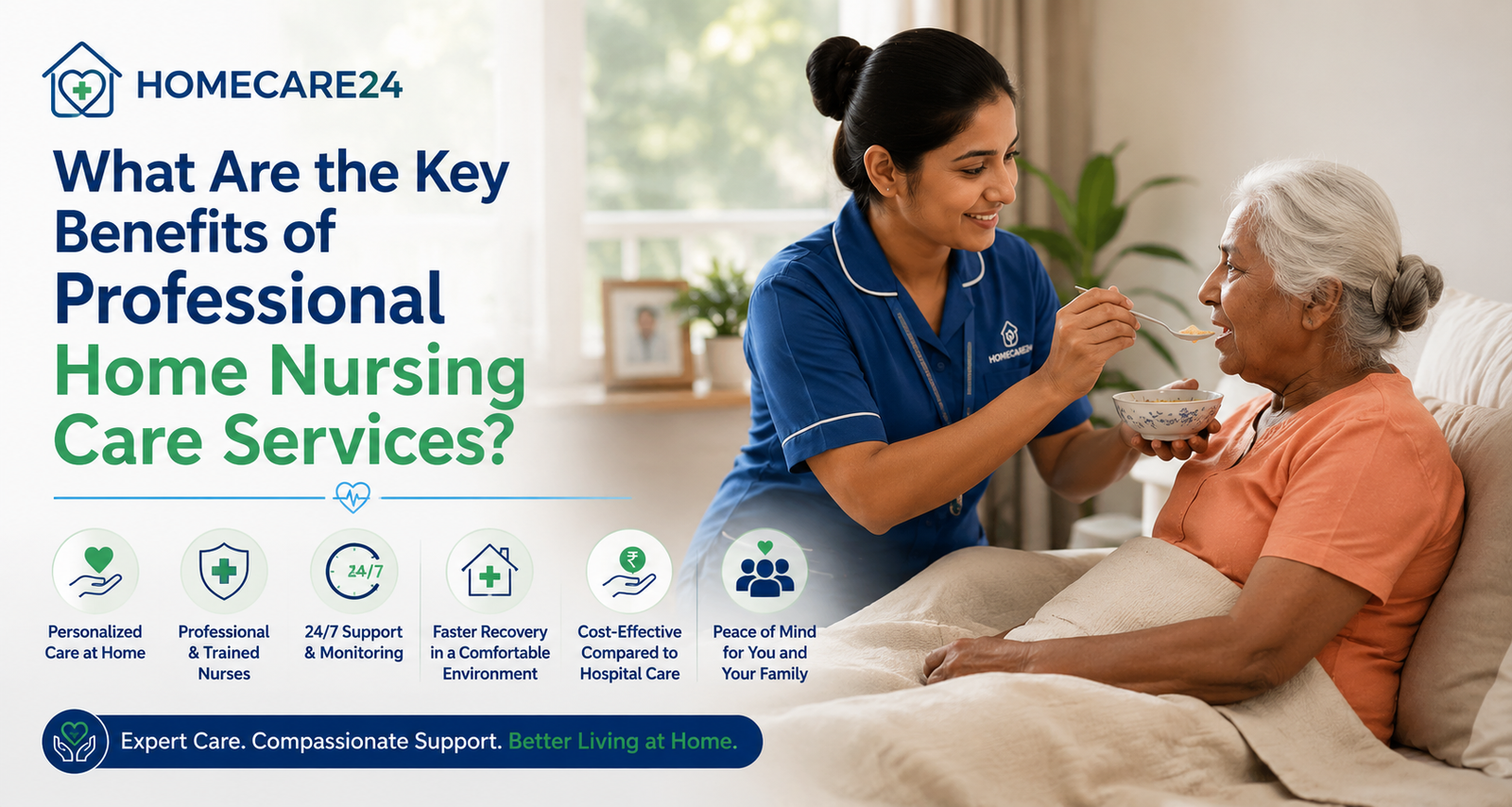
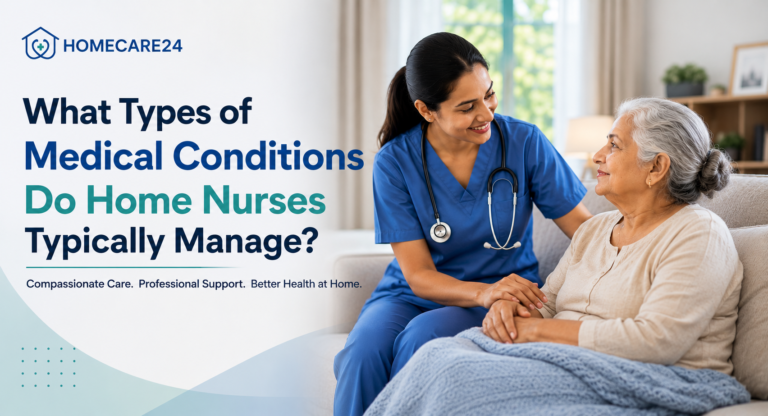
Professional home nursing care services offer qualified nursing services to patients in the comfort of their own homes. Such services may benefit elderly people, post-surgery or hospitalization patients, as well as those with chronic diseases and conditions.
The primary benefits of such services include personalized attention, professional care, comfort, and convenience. Nursing care at home may entail a variety of services depending on the patient’s condition, such as recovery services, medication assistance, monitoring of health indicators, and wound care.
For many patients, the ability to recover in the familiar environment is much more pleasant than being in a hospital or nursing facility. However, the care provided must be individualized according to the patient’s clinical needs and therefore should be selected with due medical caution.
What Is Professional Home Nursing Care?
Professional home nursing care involves healthcare-related support provided by trained nursing professionals in a patient’s home. Unlike general caregiving, nursing support focuses on clinical and health-related needs within the professional’s qualifications and scope of practice.
A care plan may depend on a patient’s age, medical needs, recovery stage, and healthcare service needs. For instance, an individual may need short-term skilled nursing care after discharge, while a person may have a chronic condition and require a continuous guardian.
Professional home nursing services can consist of monitoring a patient’s well-being, assistance with medication and dressing, wound care, post-surgery care, and communicating with the patient’s family and doctors if needed.
Home Nursing Care vs. General Home Care
Choosing the right support is important because nursing care and general home assistance serve different purposes. A professional nurse provides healthcare-related support, while caregivers or attendants generally focus on daily activities and personal assistance.
| Professional Nursing Care | General Home Assistance |
| Medical and nursing support | Daily living assistance |
| Medication-related care | Personal care support |
| Wound and clinical care | Mobility and companionship |
| Patient monitoring | Household and patient assistance |
Both types of support can be valuable, but the patient’s healthcare needs should determine which service is appropriate.
Also read: Patient Attendant vs. Nurse in Jaipur
Key Benefits of Professional Home Nursing Care Services
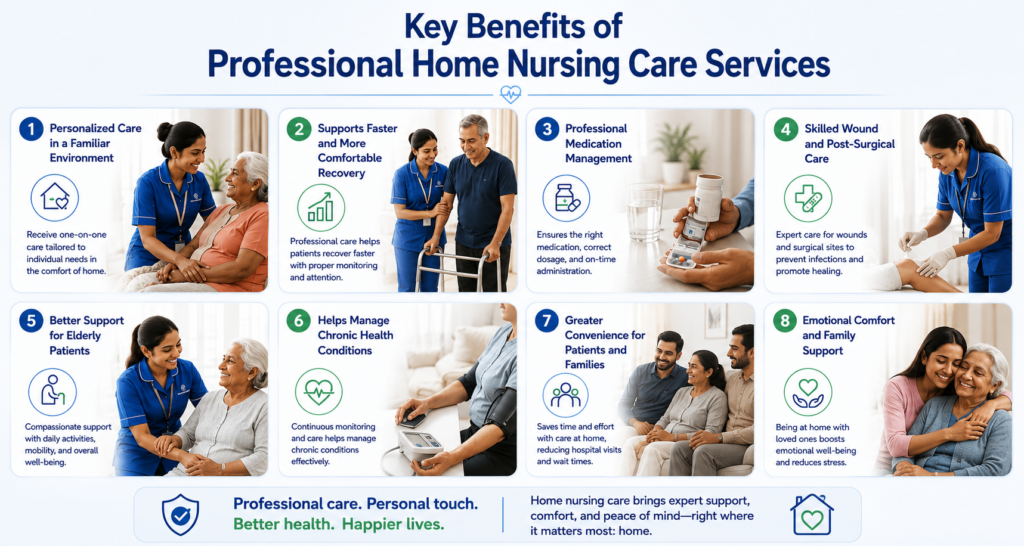
1. Personalized Care in a Familiar Environment
One of the key advantages of home nursing care is that it is more personalized. The care provided can be tailored to an individual’s unique health care needs, rather than a generalized approach for a group of patients.
Care in the patient’s home also means that they can stay in the comfort of their own environment.
This can be beneficial for elderly patients and those recovering from illness and surgery, who may not be able to handle the disruption of a hospital environment.
2. Supports Faster and More Comfortable Recovery
Professional nursing care after hospital discharge supports patients’ ability to adhere to recommended treatment plans.
Nursing care following discharge can serve as a reminder and monitor of the patient’s state, as well as a mediator for any necessary medical attention. In addition, nursing care can help to limit the need for unplanned hospital visits for those receiving treatment at home.
Such care bridges the gap between hospital treatment and recovery at home, although it cannot substitute medical intervention provided by doctors.
3. Professional Medication Management
Following a medication schedule can be difficult, especially for elderly patients or those with many prescriptions. With professional assistance from nursing personnel, patients can be assisted in following medication instructions provided by their primary physician.
This can prevent the risk of missed or untimely doses, as well as allow the nurses to note any changes in the patient’s condition and alert family members or caregivers if any issues arise.
The extent of medication assistance can be determined by the patient’s care plan, prescriptions, and the professional qualifications of the nursing staff.
4. Skilled Wound and Post-Surgical Care
Some patients may require nursing services following surgical discharge to help them recover. Nursing professionals can assist with wound care and dressing changes based on the scope of their practice as well as offer guidance relative to the surgical site and post-hospitalization recommendations.
Follow-up services ensure patients’ needs are met after discharge to facilitate the healing process. Furthermore, if a situation, which requires professional medical intervention, arises, appropriate measures can be taken in a timely manner.
Such services can benefit individuals who are unable to leave their homes or have limited access to transportation to return to the facility for wound assessment and dressing changes.
5. Better Support for Elderly Patients
Many seniors need more than assistance with everyday activities. Some require regular health monitoring, medication-related support, mobility assistance, or other healthcare-focused services.
Professional nursing services enable families to have greater peace of mind when they cannot stay with their elderly loved ones throughout the day. As such, home care nursing services, when necessary, can be arranged in tandem with other agencies providing the best elder care services in Jaipur, depending on the patient’s needs.
Our professional caregivers offer compassionate support to senior citizens, enabling them to stay in the comfort of their own homes for as long as possible in a clinical yet caring environment.
6. Helps Manage Chronic Health Conditions
Patients living with long-term health conditions may need consistent support with prescribed care routines and regular observation. Medical home care services can help make healthcare routines easier to manage at home.
A nurse may monitor relevant health observations, support prescribed care requirements, and report concerns through appropriate channels. However, professional nursing care complements the patient’s doctor—it does not replace diagnosis, treatment decisions, or emergency medical care.
Consistency and communication can be particularly important when managing ongoing healthcare needs.
7. Greater Convenience for Patients and Families
Healthcare support at home can reduce the practical challenges associated with frequent travel for certain routine care needs. This can be especially helpful for patients with limited mobility or those recovering after hospitalization.
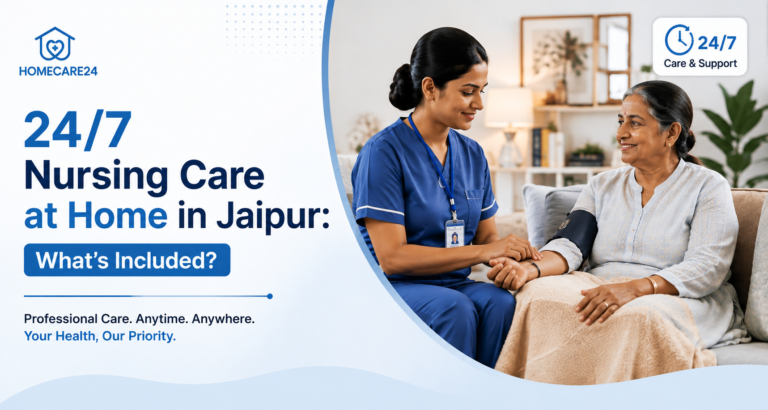
Families may also find home-based care easier to coordinate alongside work, childcare, and other responsibilities. Depending on the patient’s requirements, services may range from scheduled visits to more continuous support, including 24-hour nursing care at home or other 24-hour home care services where available and appropriate.
8. Emotional Comfort and Family Support
Being surrounded by familiar faces and environments can make an enormous difference to the patient’s comfort and experience. Home nursing enables the patient’s family to participate in the process while delegating the professional and medical aspects of care to qualified personnel.
This not only reduces the family caregivers’ burden but also allows them to provide the patient with more emotional support and companionship.
The presence of experienced professionals can help tremendously in establishing an environment where the patient feels safe and comfortable.
Who Can Benefit From Professional Home Nursing Care?
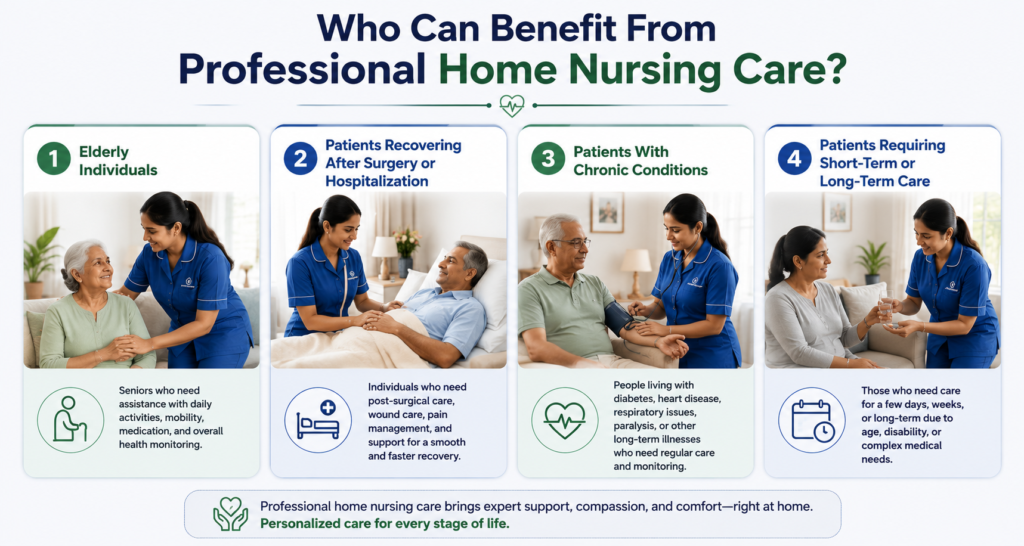
Professional home nursing may benefit different types of patients depending on their healthcare needs and a doctor’s recommendations.
1. Elderly Individuals
Seniors with mobility limitations, age-related healthcare requirements, or a need for regular monitoring may benefit from professional nursing support at home. Care can be adapted to their individual condition and daily healthcare needs.
2. Patients Recovering After Surgery or Hospitalization
Patients transitioning from hospital to home may need assistance with recovery routines, medication-related care, wound support, or post-operative instructions. Home nursing can help make this transition more organized and comfortable.
3. Patients With Chronic Conditions
Individuals managing long-term health conditions may benefit from consistent monitoring and support with prescribed care routines. Nursing professionals can provide healthcare support while patients continue receiving medical guidance from their doctors.
4. Patients Requiring Short-Term or Long-Term Care
Home nursing can be suitable for temporary recovery needs or longer-term support, depending on the patient’s clinical requirements. The duration and frequency of care should be based on an individual assessment and care plan.
What Services Are Included in Professional Home Nursing Care?
The services included in professional home nursing depend on the patient’s needs, care plan, and the nurse’s professional scope. Not every nurse or agency provides every clinical procedure.
Depending on the situation, services may include:
- Patient monitoring and basic health observations
- Medication assistance or management as appropriate
- Wound and dressing care
- Post-operative and recovery support
- Prescribed injections or clinical procedures within professional scope
- Mobility and recovery assistance
- Elderly nursing support
- Chronic condition care support
- Coordination with family members and healthcare professionals when required
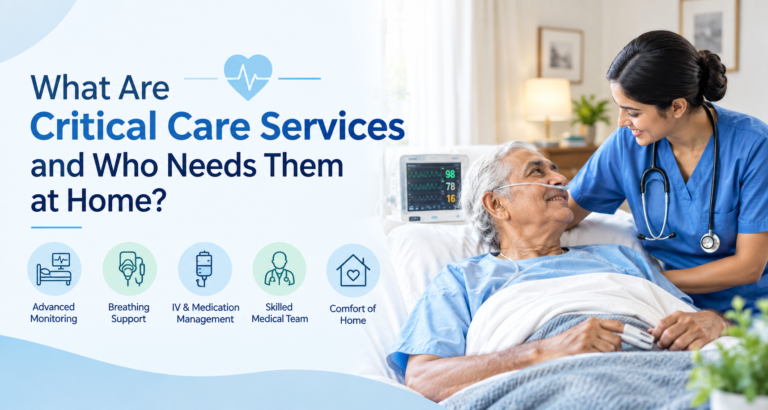
Some patients may also need additional healthcare support, such as home physiotherapy services, diagnostic healthcare services, or home care doctor visits. More complex situations may require specialized services such as tracheostomy care or professional critical care services, depending on clinical requirements.
How Does Home Nursing Care Improve the Patient Experience?
Home nursing can improve the patient experience by combining professional healthcare support with the comfort of familiar surroundings. Patients may experience less disruption to their normal routines while receiving more individualized attention.
Family members can also remain involved in the patient’s care journey. This creates an environment where professional support and family involvement can work together.
Home Nursing Care vs. Hospital-Based Care
Home nursing is not a replacement for emergency or hospital-based treatment. Hospitals are necessary when patients require emergency intervention, intensive monitoring, surgery, or specialized medical treatment.
Patients experiencing serious or emergency symptoms should seek immediate medical attention. Home nursing is most appropriate when a patient’s condition and healthcare plan allow professional care to be safely delivered at home.
How to Choose the Right Professional Home Nursing Care Service?
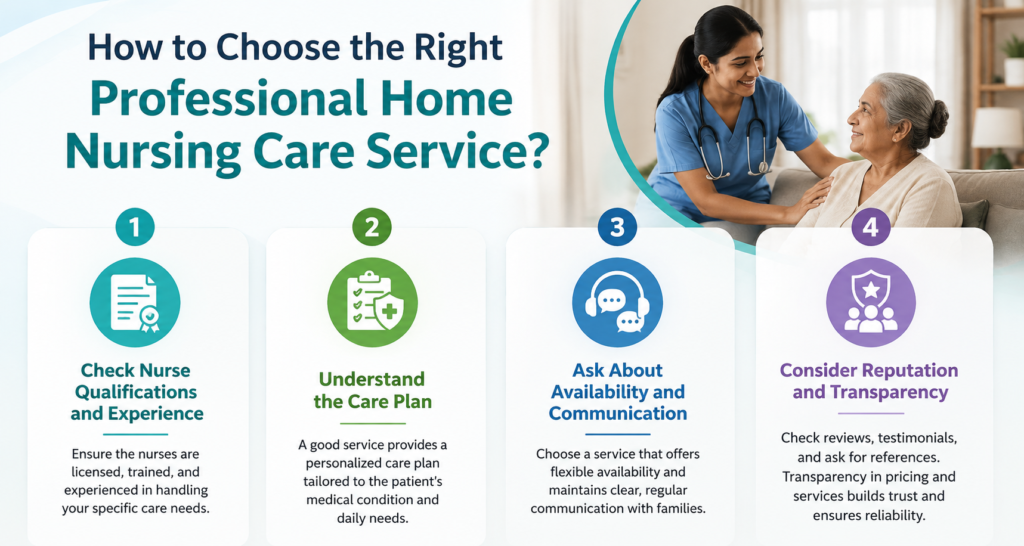
Choosing the right provider requires more than simply comparing availability. Families should consider the patient’s healthcare needs and whether the provider can offer appropriate professional support.
1. Check Nurse Qualifications and Experience
Ask about relevant qualifications and experience, especially if the patient has specific healthcare requirements. Experience with similar conditions or recovery needs can help ensure appropriate care planning.
2. Understand the Care Plan
Clarify exactly what services will be provided, how often visits will occur, and how long support may be required. A clear care plan helps families understand expectations from the beginning.
3. Ask About Availability and Communication
Understand how the provider communicates with families and what happens if the patient’s condition changes. For patients requiring continuous support, ask specifically about options such as 24-hour bedside attendants or nursing availability.
4. Consider Reputation and Transparency
Review testimonials and service information where available. Transparent pricing, clearly explained terms, and realistic service expectations are important when choosing a care provider.
Why Choose HomeCare24 for Professional Home Nursing Care?
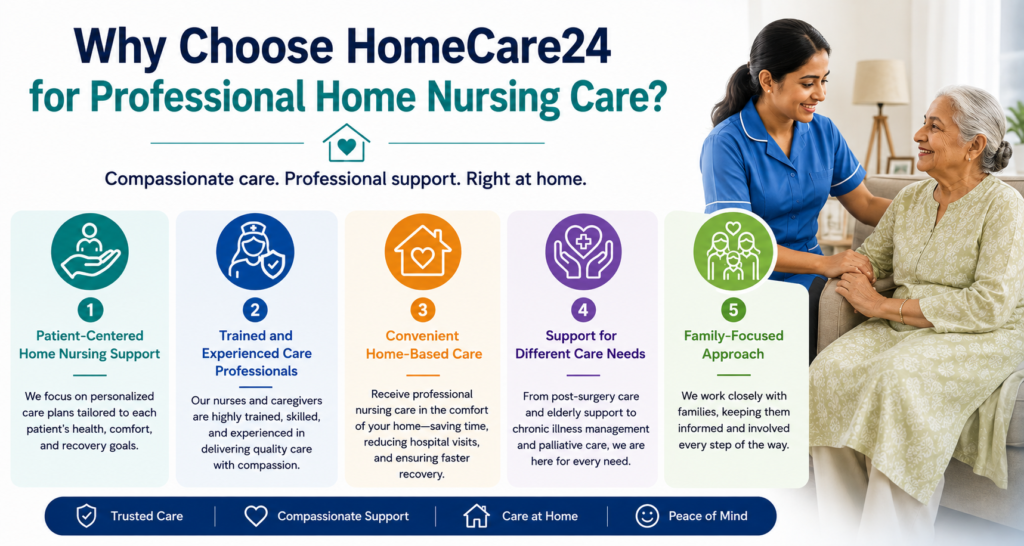
1. Patient-Centered Home Nursing Support
HomeCare24 focuses on understanding individual care requirements and helping families explore suitable home-based support options. Every patient has different healthcare needs, recovery goals, and daily routines.
2. Trained and Experienced Care Professionals
Professional care requires the right skills and experience. Matching a patient’s requirements with appropriate nursing support is an important part of creating a suitable care arrangement.
3. Convenient Home-Based Care
Receiving appropriate support at home can reduce unnecessary travel and make healthcare routines easier for patients and families to manage. This can be particularly helpful during recovery or when mobility is limited.
4. Support for Different Care Needs
HomeCare24 can help families explore support for different care situations, from recovery and elderly care to more specialized requirements. Service availability should always be discussed based on the patient’s individual condition and needs.
5. Family-Focused Approach
Good home care should take into account the needs of both patients and their families. Keeping their families well-informed and lightening the load of caregiving duties can help tremendously.
Should you be considering professional home nursing care services, please visit HomeCare24 to review the options available or get in touch with us in order to address your family’s specific needs.
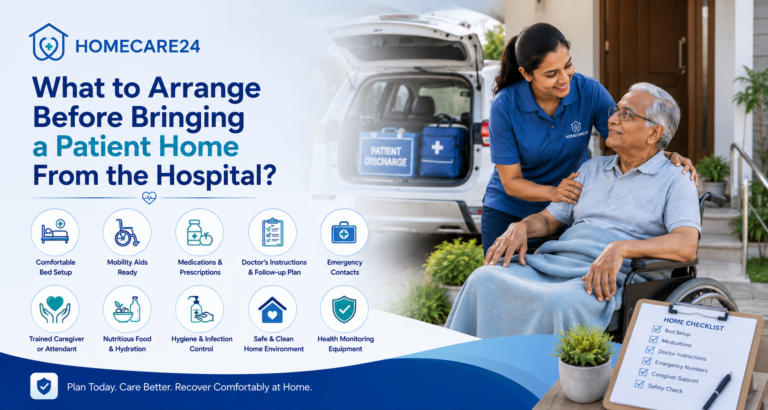
Read more: What to Arrange Before Bringing a Patient Home From the Hospital
Conclusion
Professional home nursing care can help you to get personalized treatment with skilled healthcare workers’ assistance.
Such services are great for the elderly, post-surgery/sick patients, or those needing to recover at home.
Whatever your situation is, these experts will provide aid and monitor your condition 24/7 with exceptional professionalism. There are a lot of options concerning home patient care. The most appropriate one should be chosen considering the patient’s needs, personal preferences, medical expertise, and other factors.
If you need to take care of somebody, contact HomeCare24 and describe your situation to receive appropriate help.
Frequently Asked Questions About Professional Home Nursing Care
1. How much does 24-hour nursing care at home cost in India?
The cost of 24-hour nursing care at home varies depending on the city, level of nursing support, patient condition, duration, and specific medical requirements. Families should request a detailed assessment and pricing information from the provider.
2. What are the duties of a home nurse?
A home nurse may provide patient monitoring, medication-related support, wound care, post-operative assistance, health observations, and other clinically appropriate services. Duties vary according to the patient’s care plan and the nurse’s qualifications and professional scope.
3. Who needs nursing care at home?
Home nursing may benefit elderly individuals, patients recovering after surgery or hospitalization, people with chronic health conditions, and patients requiring short-term or long-term healthcare support at home.
4. What are the four types of nursing care?
Nursing care can be broadly described in different ways depending on the healthcare setting. Common categories include preventive care, acute care, chronic or long-term care, and rehabilitative or recovery-focused care.
5. Is home nursing care better than hospital care?
Neither option is universally better. Home nursing can be suitable for stable patients whose healthcare needs can be safely managed at home, while hospitals are essential for emergencies, intensive treatment, surgery, and complex medical conditions.